I only came across this book because it was picked for the “difficult women book club” in Barcelona and I didn’t expect much going into it. Knowing that I was in for three short stories that were written in 1892, 1893 and 1911, I wouldn’t have guessed that I would actually enjoy them! Each of them had something special about them and I was really surprised by the writing and the style for the period that the stories were written in.
It felt like there was an eerie atmosphere to each of these short little tales. There was something haunting or even menacing about them, with the gender roles being turned around for once, the women taking the upper hand over the men. The first one, “The Yellow Wall-Paper“, depicted a situation where a woman was denied her feelings, emotions and the perception of her own body due to an analysis by male doctors. It was especially interesting since there was an autobiographical touch to it, the author having experienced a similar treatment during her own postpartum depression.
You see he does not believe I am sick!
And what can one do?
If a physician of high standing, and one’s own husband, assures friends and relatives that there is really nothing the matter with one but temporary nervous depression – a slight hysterical tendency – what is one to do?
p. 1-2
The second story, “The Rocking Chair“, having had its focus on male perceptions linked to desires and illusions towards women, was my least favorite one. But luckily the third one, “Old Water“, really made it up for it. It was a strong portrayal of female power, standing up to family expectations and male admirers that don’t take no for answer. The twists for both endings of the first and the last stories added the cherry on top to the reading experience.
All in all, I was glad to have discovered Charlotte Perkins Gilman as a writer and it has made me curious to get familiar with other writing from the “Penguin Little Black Classics” series. This was a great case of showing how book clubs can be helpful in order to step out of one’s reading comfort zone. Even though this definitely won’t make it on my list of favorite books, I was still positively surprised that this ended up being a short, quick and relatively enjoyable read.
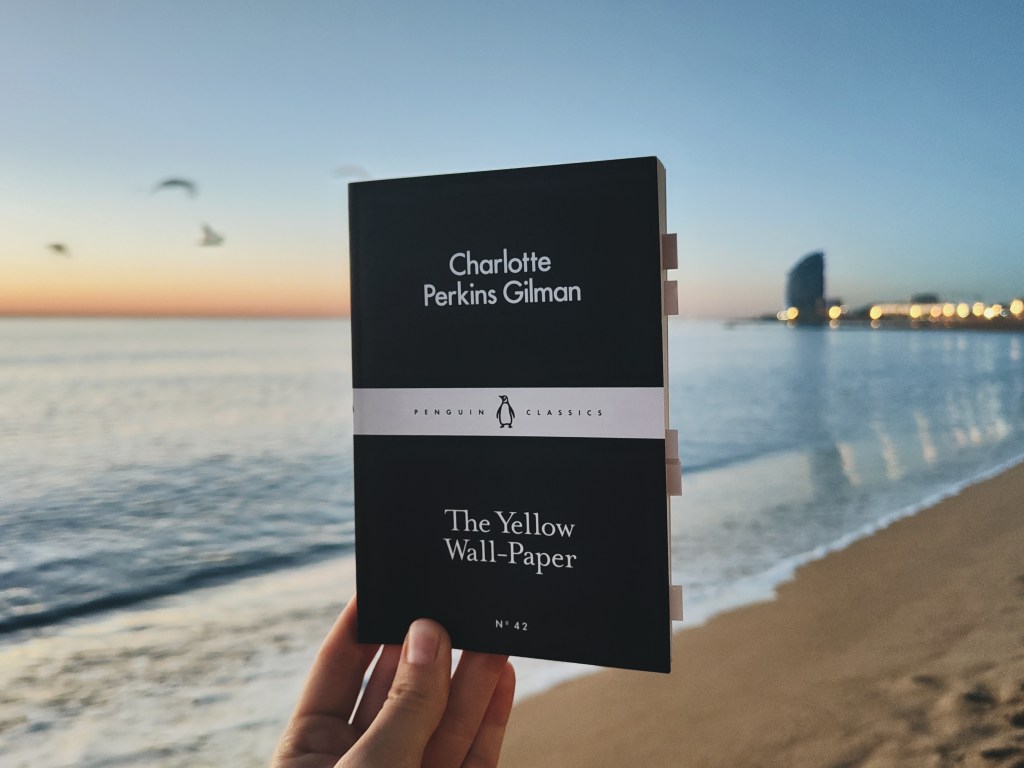
★★★☆☆ (3/5)
Edition: ISBN 978-0-141-39741-2
Penguin Random House, 2015 (essays first published in 1892, 1893 and 1911)
 VK READS